

"Is anyone here?".. The tragedy of the Al-Sa'ada building and the flight from the tents of death to the guillotine of concrete
Before the screams of the girl beneath the rubble and the calls of the Civil Defense crews, writing became unavoidable..
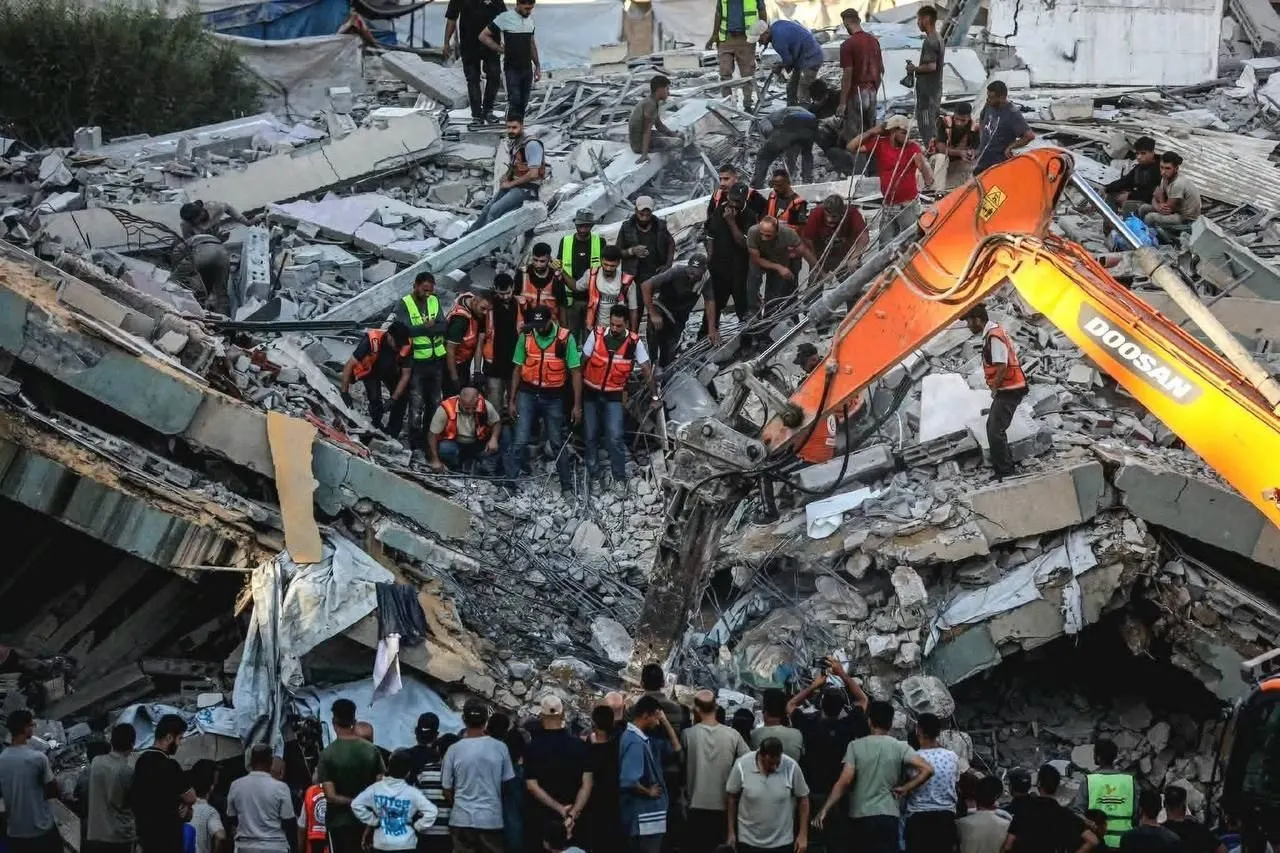
This cry that has echoed in our ears since the morning of Wednesday, 16 September: "Is anyone here?".. It was no ordinary call from the men of the Civil Defense amid the rubble of the Al-Sa'ada building that suddenly collapsed onto the heads of its residents; it was a hoarse scream searching for the remnants of life beneath tons of concrete, and at the same time searching for the remnants of a conscience in a world content merely to watch.
Beneath the desolate rubble, the tragedy took shape in the eyes of a little girl swallowed by the jaws of two collapsed concrete ceilings; she begged for survival with tears that mixed the terror of death with the hope of life, while the bare hands of the rescuers clawed relentlessly through the boulders, a battle against the impossible without machines or equipment. It is a cruel paradox that a building named "Happiness" collapses and turns into a mass grave for those who sought refuge in it, in a scene that sums up the pain of a city being crushed beneath tons of disappointment and death.
The tents of death and the zero option
Before this bloody scene, the painful question imposes itself: what forces entire families to live in homes and civilian buildings that have been devastated by thousands of tons of explosives and could collapse at any moment?
The answer lies in the cruelty of the alternatives and the absence of choices. The Palestinian civilian has become trapped between two fires: the fire of displacement in tents unfit for a dignified existence, and the fire of exploitation.
I experienced this tragic reality up close when I visited my in-laws, whom circumstances had forced to pitch their tent beside the rubble of their destroyed home in Gaza City. There I felt the truth: the tent is not a refuge, but slow death itself; merciless heat that scorches the body, or bitter cold that cuts through the bones, a terrifying spread of insects and rodents due to the lack of pesticides, and diseases lying in wait for the children.
Despite all the attempts at artificial beautification and arrangement, the looming danger remains suspended over their heads, where children's lives are threatened by the remnants of stones clinging to the rubble, and by weakened concrete edges awaiting the first tremor to come crashing down on the tent and its inhabitants.
Whoever can, pays!
And if this displaced person decides to flee the hell of the tent and search for an apartment to house his family, he collides with a wall of exploitation and blatant injustice from some landlords. In the absence of oversight and accountability, rents have turned into fantastical sums that those who have lost their source of income and their savings cannot afford, under the oppressive slogan: "This is what there is.. and whoever can, pays!". This economic cruelty is what forces residents to return to destroyed homes, preferring to gamble with their lives beneath cracked ceilings rather than be forced to die in the open air.
The geography of destruction and the language of numbers
This tragedy is not merely a passing accident, but the direct result of a policy of destruction carried out by the Israeli occupation during the war of genocide, which has turned the Gaza Strip into a field full of time bombs and deferred graves. In the language of the numbers that document the scale of the crime:
80,000 tons of explosives; dropped by the occupation on the Gaza Strip, exceeding the destructive power of several nuclear bombs, leading to the collapse of the infrastructure and the engineering foundations of buildings.
150,000 housing units; completely destroyed and razed to the ground.
200,000 to 250,000 housing units; severely or partially damaged.
Around 3,000 cracked buildings; technically classified as unstable structures on the verge of collapse, according to Civil Defense reports.
Dozens of martyrs; killed one after another in scattered collapses of these dilapidated buildings, now joined by the martyrs of the Al-Sa'ada building.
Urgent appeals to save lives hanging by a thread
In the face of this ongoing threat to the lives of hundreds of thousands, condemnation alone is no longer enough; it has become the duty of the international community and UN organizations to intervene immediately and impose a humane reality that saves what can be saved, through practical and urgent steps:
Exerting pressure to allow the entry of building materials, permitting the repair and support of partially damaged homes that are still salvageable, and providing a safe living environment that protects residents from the danger of sudden collapses.
Providing and allowing the entry of caravans (mobile homes) as an urgent and temporary housing solution that offers a minimum of human dignity and a safe alternative to the worn-out tents of death, sparing residents from resorting to cracked structures.
Allowing the entry of heavy machinery and equipment to enable the Civil Defense teams to clear rubble, remove the extremely dangerous and collapse-prone buildings that threaten the lives of passersby and the displaced, and above all; to save the lives trapped beneath the rubble, instead of leaving them to die in silence.
The tears of that girl, trapped between the jaws of the concrete, and the cry "Is anyone here?", will remain a double historical indictment; an indictment of an occupation that sows death and destroys the foundations of life, and an indictment of an internal reality in which oversight is absent, and a mark of shame on the forehead of an international community that watches this open slaughterhouse in silence.
Gaza today is not only being crushed by missiles, but by disappointment, despair, and deadly alternatives.