
At Be Human, we are following with concern the announcement by the United Nations World Food Programme that a funding shortfall has forced it to cut its food assistance in Gaza by around a third. This decision will leave some half a million people without vital aid as winter approaches.
Over the past three years, the programme's assistance has been a lifeline for up to 90% of households in Gaza. Since the ceasefire in October 2025, it has been reaching around 1.6 million people each month, but funding is no longer sufficient to maintain this level.
What has changed?
The number of people receiving assistance has fallen from 1.6 million to 1.1 million of the most vulnerable.
Food rations have been halved: one food parcel instead of two, with a smaller bag of flour.
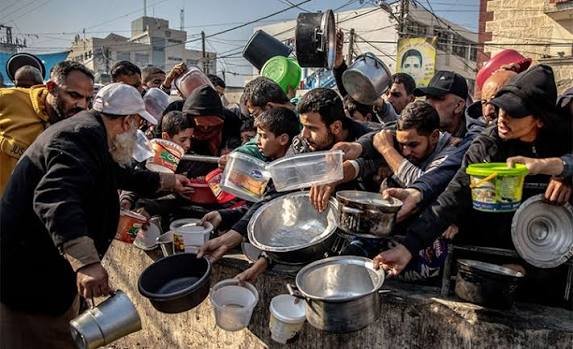
The number of hot meals has dropped from 250,000 to 150,000 a day, and in hard-to-reach areas, including those near the "Yellow Line", families will receive a meal every other day instead of every day.
Cash assistance has been reduced for 75,000 households.
In the West Bank, the number of people receiving assistance fell in September from 400,000 to 200,000.
A fragile reality
Around 1.4 million people (67% of the population) face acute food insecurity, a slight improvement on 77% at the end of 2025, but the situation remains fragile. Some 200,000 people are still in the Emergency phase, meaning they urgently need immediate assistance to prevent deaths from hunger. Only one in five children receives a sufficiently varied diet, and more than 80% of the population is unemployed, making it difficult to buy fresh or protein-rich food even when it is available.
The urgent need
The programme has received less than half the funding it received in previous years for its operations in Palestine, and urgently needs US$450 million for the period from October 2026 to March 2027. The latest Integrated Food Security Phase Classification (IPC) analysis warns that a continued decline in assistance could lead to a sharp rise in needs.
With these developments, every effort that helps ease the suffering of families in Gaza matters more than ever.